The essentials before you come
- One ticket, four museums and the Dôme. The Army Museum ticket also opens Napoleon’s tomb; there is nothing extra to buy. See what the ticket covers.
- The courtyard and the soldiers’ cathedral cost nothing. Two of the finest spaces in the monument are free, and almost everyone skips them: the full list is here.
- Allow two to four hours. The Army Museum is really several museums stacked up. One hour covers the Dôme alone: see how long to allow.
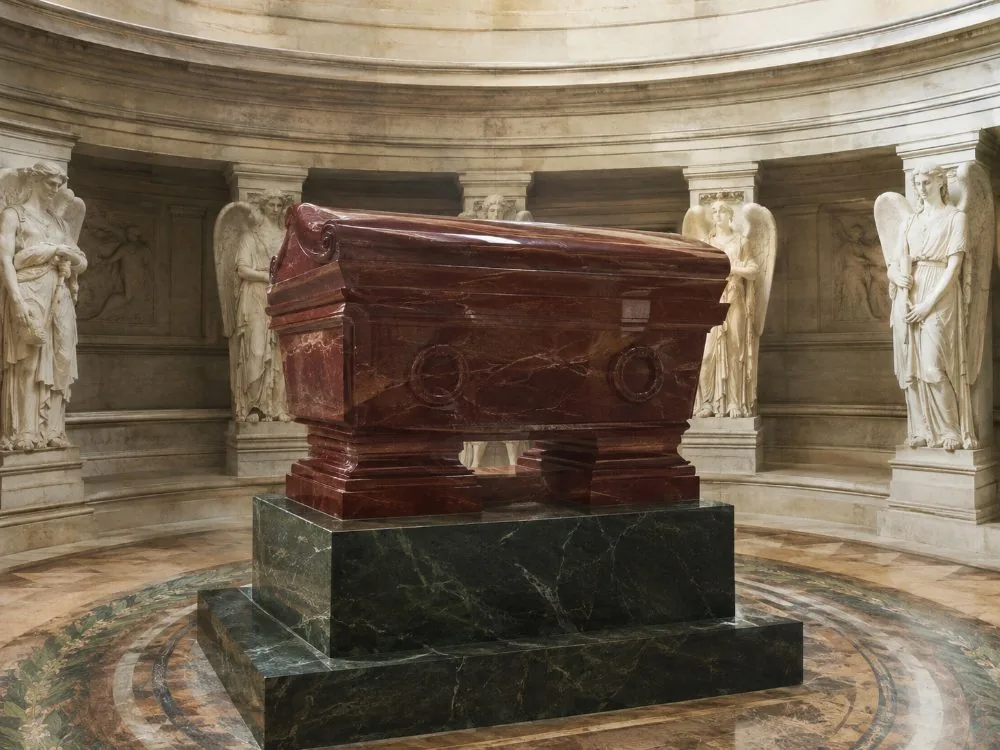
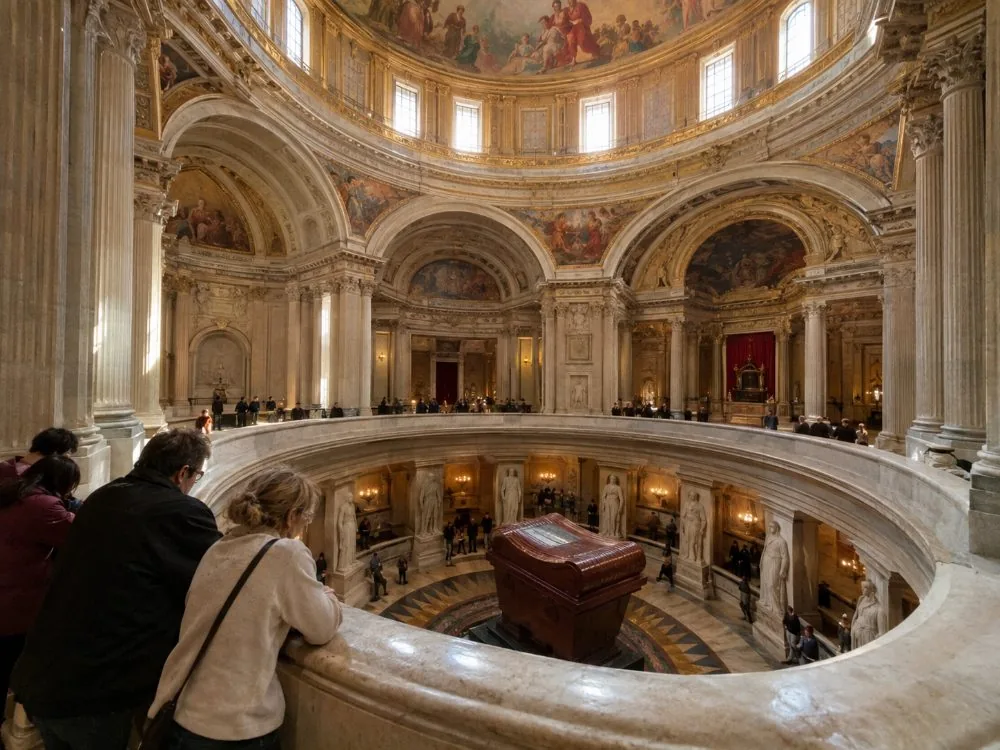
- Napoleon lies in an open crypt, not under a slab. You look down at the sarcophagus first, then descend: the sequence is on the tomb page.
- Closed on 1 January, 1 May and 25 December, and free for everyone on 14 July. The dates that catch people out are on the closing-days page.
What the Les Invalides ticket opens
The flagship booking on this page: the entry ticket to the Army Museum and Napoleon’s tomb, the one nine visitors in ten need, valid for the whole day.
What you see
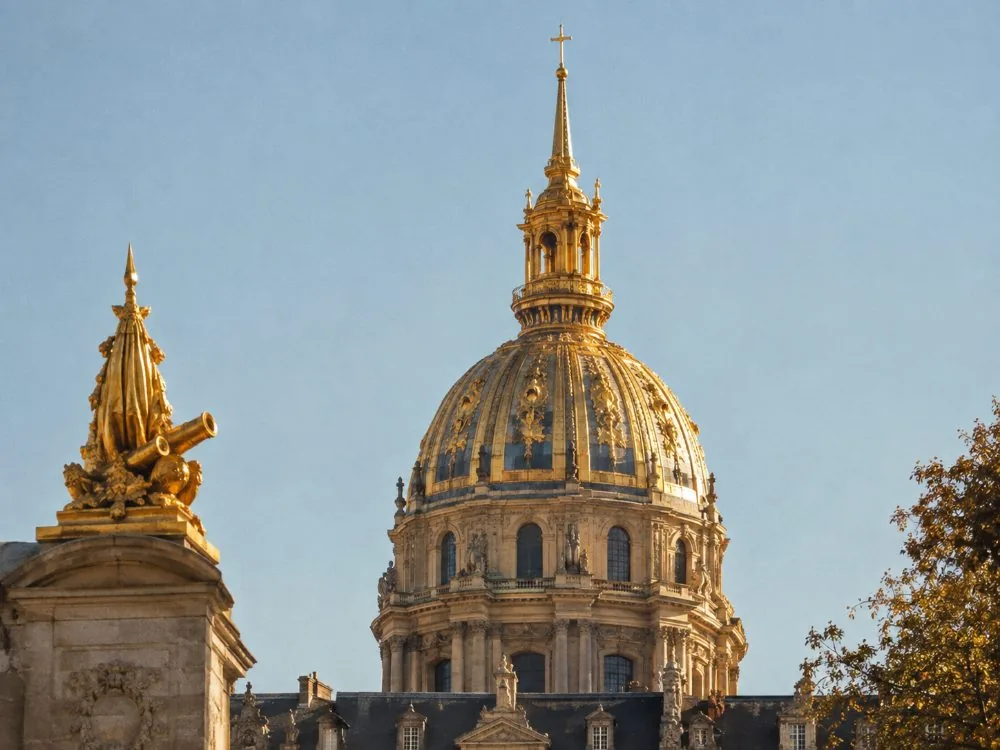
- The Dôme by Hardouin-Mansart, its cupola painted by Charles de La Fosse, and Napoleon’s tomb in its open crypt
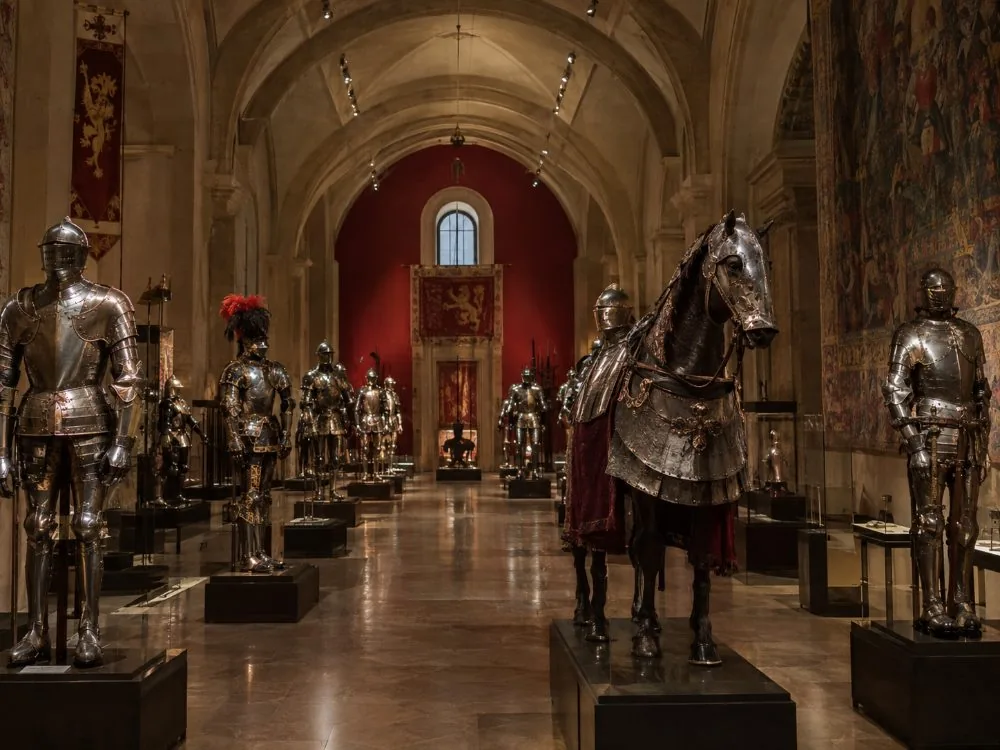
- The Army Museum: arms and armour, the Louis XIV–Napoleon III department, the two World Wars department
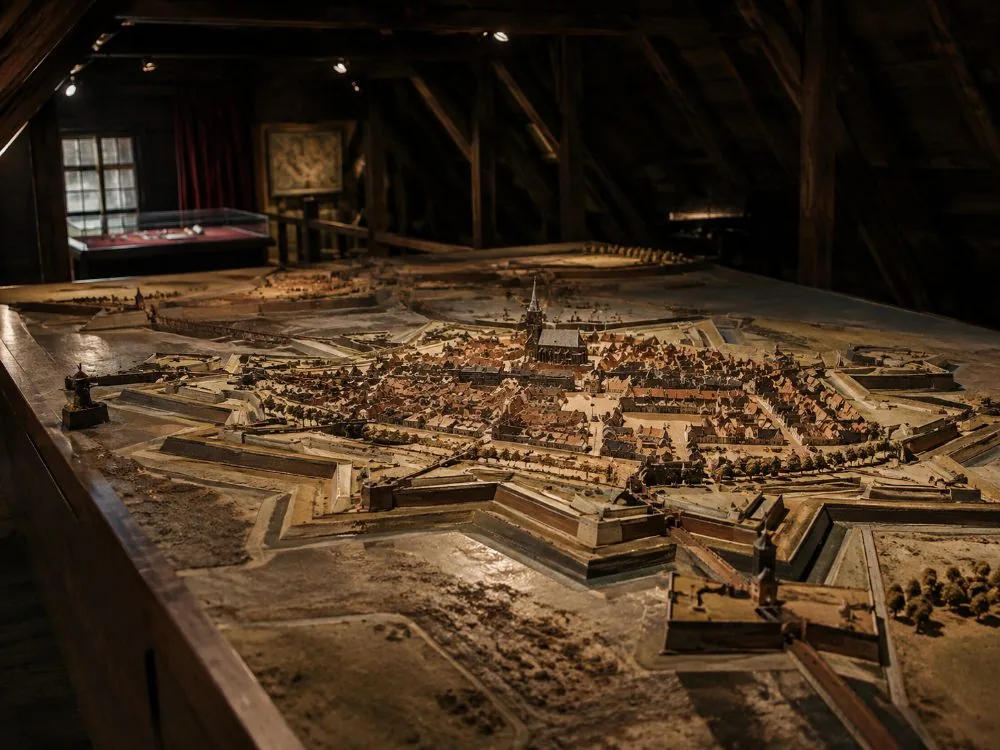
- The Museum of Relief Maps, under the roof: Louis XIV’s and Vauban’s scale models of fortified towns
- The Museum of the Order of the Liberation and the Charles de Gaulle Historial
What it saves you
- Hunting for a “Napoleon’s tomb” ticket that does not exist
- Paying again at each building: the same ticket lasts all day, including if you go out for lunch and come back
- Missing the relief-map floor, which half of all visitors never find
- Buying the temporary exhibition separately — it is included
What to know
- The courtyard and the Saint-Louis cathedral stay free, ticket or no ticket
- The ticket includes neither guide nor audio guide: see guided or on your own
- Some spaces close on the first Monday of the month: see closing days
- Large bags and suitcases are not accepted: see the complete guide
The route, in the order you actually walk it
What you cross on the way in, stop by stop, with what each one adds — and why the order matters more here than at any other Paris monument.
Two entrances, two different visits. From the Place Vauban, to the south, you arrive at the foot of the Dôme. From the esplanade, to the north, you cross the moats and the great courtyard first, neither of which needs a ticket. The control point is at the museum doors, not at the gates of the site.
- The moats and the triumphal battery — A walk round the base of the building among bronze cannon. Why it matters: it is free, it is empty, and it is the only place from which you can measure the thirteen hectares.
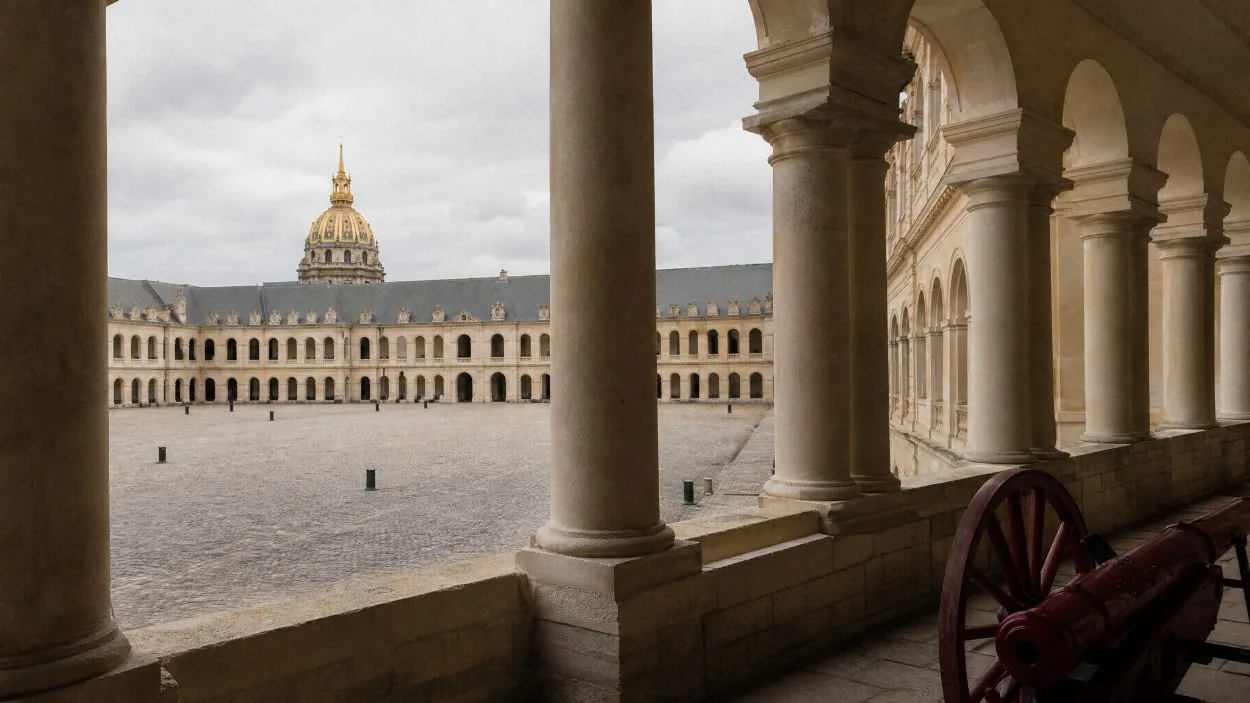
- The great courtyard, free and unticketed — Two tiers of arcaded galleries, and under the central arch the statue of Napoleon known as “the little corporal”. Why it matters: this is where the visitors who leave believing they have seen Les Invalides actually stop.
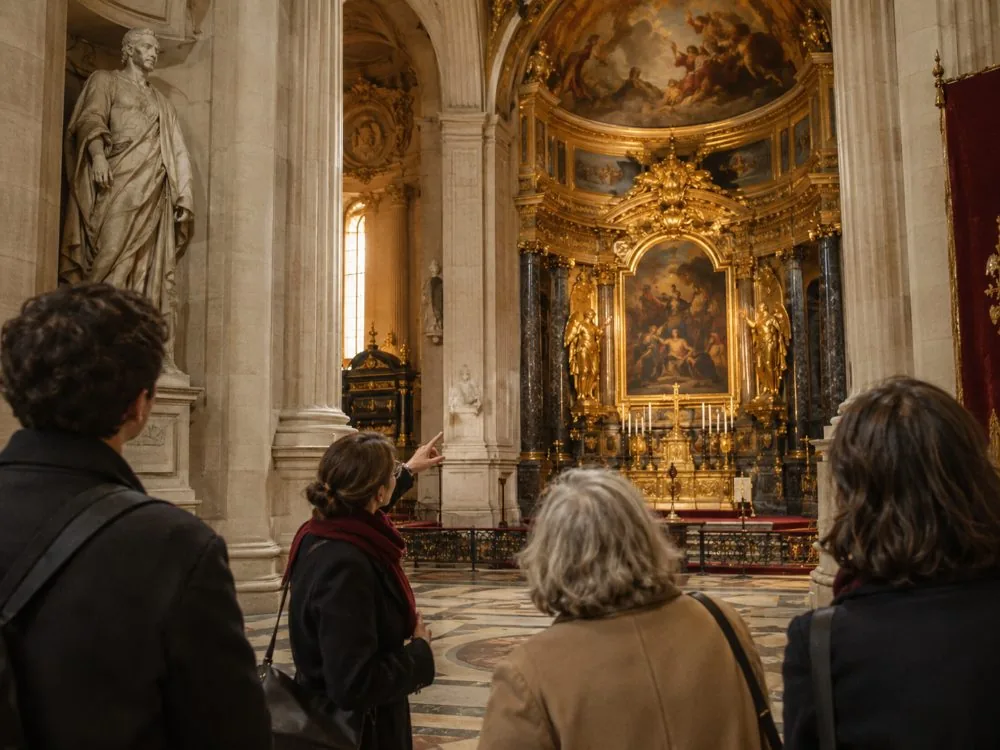
- The cathedral of Saint-Louis-des-Invalides — The soldiers’ church: plain, white, hung with flags captured from the enemy. Why it matters: it costs nothing, it is almost always empty, and it once opened onto the Dôme through a glazed bay.
- The Dôme and the tomb — The ticketed part begins. You come in under the cupola, lean over the open crypt, then go down the turning stair. Why it matters: the sarcophagus only makes sense seen from above first and from below second.
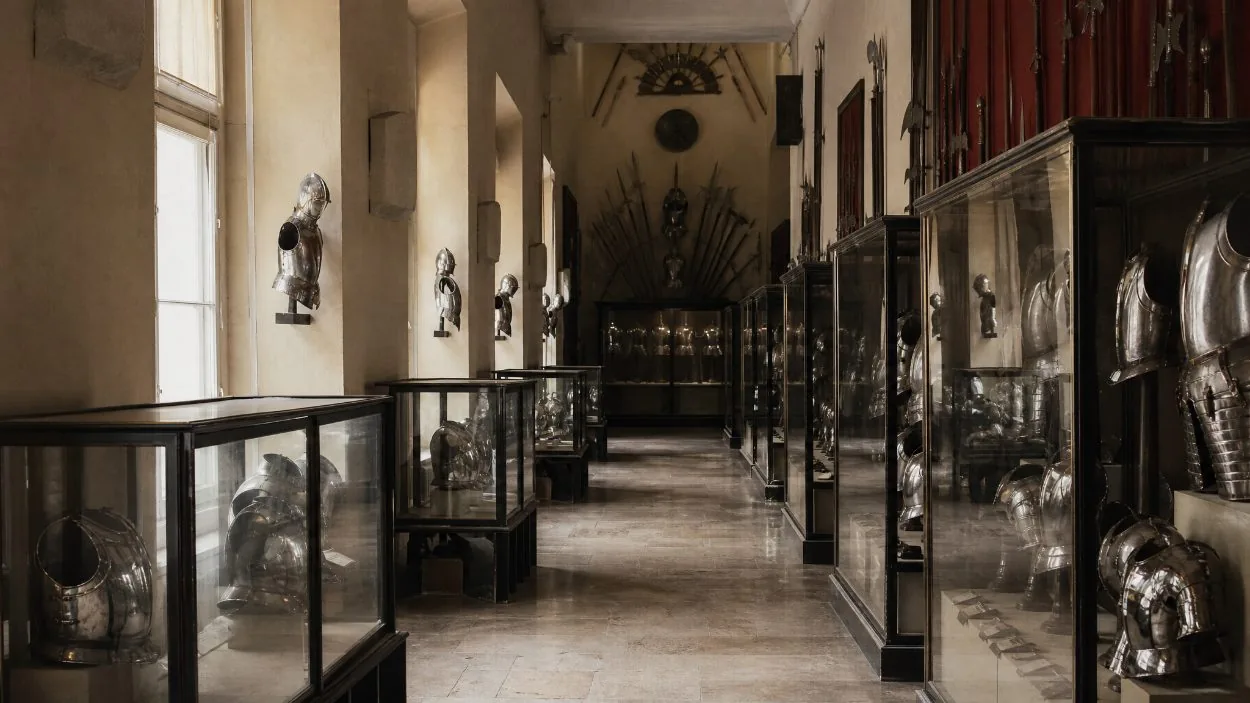
- The Army Museum, west wing — Armour, full harnesses, edged weapons and firearms from the 13th to the 17th century, ranked under the vault. Why it matters: it is the part children like best, and the shortest.
- The relief maps, under the roof — A run of nearly dark rooms holding scale models of fortified towns the size of banqueting tables. Why it matters: nobody goes up, and it is the strangest thing in the building.
- The two World Wars, to finish — The longest and densest department in the museum. Why it matters: it asks for energy, so it belongs at the end or on another day.
With two hours, do the Dôme, the armour and the cathedral. With four, add the relief maps and the two World Wars. The full breakdown is on the what-to-see page.
Booking, in four steps
Choose your format
The entry ticket on its own, a small-group guided tour, a skip-the-line tour, the Napoleon walk, or the Paris Museum Pass if you are doing several monuments. All six are compared below and on the bookings page.
Check the day
The monument closes on 1 January, 1 May and 25 December, some spaces close on the first Monday of the month, and summer and winter hours differ: see the opening-hours page.
Book the date
The date is booked on GetYourGuide; the entry ticket is valid all day and does not lock you into a time slot. What does and does not need booking is explained on the booking page.
Arrive on the right side
Place Vauban to start with the Dôme, the esplanade to start with the courtyard. Entrances, metro lines and distances are on the getting-there page.
The Les Invalides ticket, date by date
Live availability for the entry ticket that opens the Army Museum, the Dôme and Napoleon’s tomb, the relief maps and the Order of the Liberation. The great courtyard never needs a ticket.
Ticket only, guided tour, or Museum Pass?
Three ways in. The ticket alone is enough for most people, because the museum labels are unusually good. The small-group tour is for anyone who would rather be told than read. The pass only makes sense if you are stacking Paris monuments across the same trip.
| Our pickLes Invalides: Napoleon’s Tomb & Army Museum Entry | Napoleon’s Tomb & Invalides Small-Group Guided Tour | Paris Museum Pass, 2, 4 or 6 consecutive days | |
|---|---|---|---|
| What it opens | Army Museum, Dôme, Relief Maps, Order of the Liberation | The same spaces, with a guide | Les Invalides and many Paris monuments |
| Duration | Ticket valid all day | 1 hr 30 guided | 2, 4 or 6 consecutive days |
| Pace | Yours, with re-entry allowed | The group’s, eight people maximum | Yours, across several days |
| The tomb | Included, no supplement | Included and narrated | Included |
| Best for | Most visitors | People who want to understand, not read | Trips of three days and up |
| The catch | No commentary: you read it yourself | 1 hr 30 cannot cover the whole museum | You must collect the pass in person first |
| Book this → | View → | View → |
Photo gallery
Les Invalides in pictures
The Dôme, the tomb, the great courtyard, the armour, the relief maps and the cannon in the moats, as you meet them along the route.


Six bookings compared
The Les Invalides entry ticket, three ways to add a guide, the pass that includes it, and the neighbouring museum everyone should add to the same day. Our detailed reviews are on the reviews page.
 Most booked
Les Invalides: Napoleon’s Tomb & Army Museum Entry
 8 people maximum
Napoleon’s Tomb & Invalides Small-Group Guided Tour
 Entry reserved
Les Invalides & Napoleon’s Tomb Guided Tour
 Imperial Paris
Napoleon Walking Tour with Les Invalides & Tomb Entry
 Invalides included
Paris Museum Pass, 2, 4 or 6 consecutive days
 400 metres away
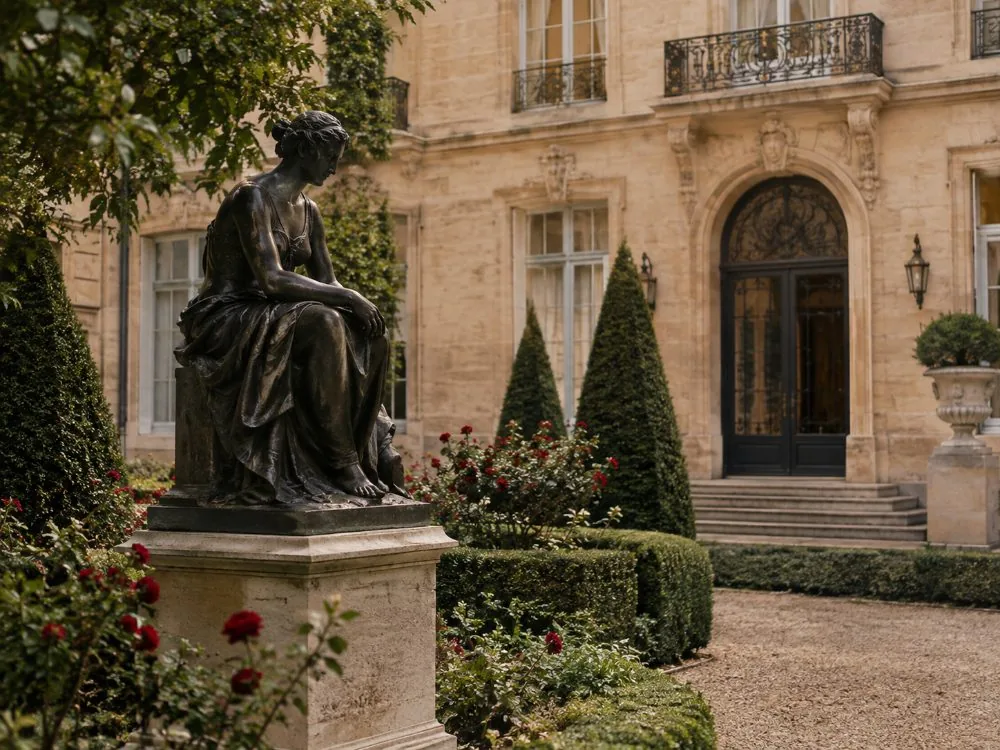
Rodin Museum Entry Ticket, museum and garden
What visitors say
What comes up most often in the GetYourGuide reviews of the products compared here, summarised theme by theme rather than quoted word for word.
The most frequent complaint is not the museum but the time: many say they came for an hour and spent three without seeing everything.
Visitors who arrive late in the day describe a quiet Dôme and low light; those who come around midday describe a rail crowded shoulder to shoulder.
Reviews of the small-group tours keep saying one thing: the guide makes the sequence of rooms make sense, which the labels do not.
Disappointed visitors are almost always the ones who expected only a tomb and found a vast military museum whose scale they had not planned for.
Families regularly report that the armour hall works far better with children than the two World Wars department.
Museum Pass users remind everyone that it has to be collected before you start, and that this costs half an hour on the first day.
Ratings and review counts are the live GetYourGuide figures from the operators. Read our full reviews ›
Before you book
The four questions I get asked most in the neighbourhood, with the short answer.
Can you get in without paying?
Partly, yes. The esplanade, the moats and their cannon, the great courtyard and the cathedral of Saint-Louis-des-Invalides are free all year round. The Dôme, the tomb and the four museum spaces need a ticket, except for the free categories and for everyone on 14 July. The detail is on the free-access page.
Do you need a special ticket for Napoleon’s tomb?
No, and this is the most widespread confusion. The tomb is inside the Dôme, and the Dôme is included in the Army Museum ticket: one ticket, four museums and a royal church. See what the ticket covers and how the tomb visit works.
Guide or self-guided?
The Army Museum is one of the best-labelled museums in Paris, so going on your own works very well. A guide is for people who want the continuous Napoleonic story rather than the objects, and for anyone with only ninety minutes. The comparison is on guided or on your own.
How long does it really take?
An hour for the Dôme alone. Two hours for the Dôme, the armour and the cathedral. Three to four hours to add the relief maps and the two World Wars department. The breakdowns are on the how-long page.
Those dates don’t work?
Browse the other tickets and tours available around Les Invalides and the 7th arrondissement, and pick the day that suits you — instant confirmation.
Les Invalides, explained
I spent twenty-two years sorting archive boxes in one wing of this building, and I have lived on the rue Saint-Dominique ever since. I see the same scene on the esplanade every day: people photograph the golden dome from the Pont Alexandre-III, walk through the courtyard, decide it is enormous, and leave. They have seen neither the tomb nor a single gun from the collection. This site exists to say that sentence before the visit, not after.
It is not a museum, it is a small town
The Hôtel national des Invalides covers thirteen hectares and still contains things that have nothing to do with one another: four museum spaces, a working military parish cathedral, a royal church under a gilded dome, the French defence archives, the military governor of Paris, and a care home where wounded servicemen actually live. You do not “do the museum” in an hour here; you choose what you are going to see. What is open to visitors is set out on the what-to-see page.
What is free, and what you pay for
The boundary is simple, and almost nobody knows it before arriving. Free, with no ticket: the esplanade, the dry moats and their bronze cannon, the great courtyard, and the cathedral of Saint-Louis-des-Invalides — the soldiers’ church, the one hung with flags captured from the enemy. What you pay for is everything behind a controlled door: the Army Museum, the Dôme and its tomb, the Museum of Relief Maps, the Museum of the Order of the Liberation and the Charles de Gaulle Historial. The full list is on the free-access page.
One ticket, four museums
This is the point I repeat most often, and the one that pleases people most: there is no separate “Napoleon’s tomb” ticket. The Army Museum entry ticket also opens the Dôme, the relief maps, the Order of the Liberation, the de Gaulle Historial and the temporary exhibitions. Visitors hunting for a price for the tomb alone are hunting for something that does not exist. Exactly what the ticket covers is on its own page.
The Dôme, and what is inside it
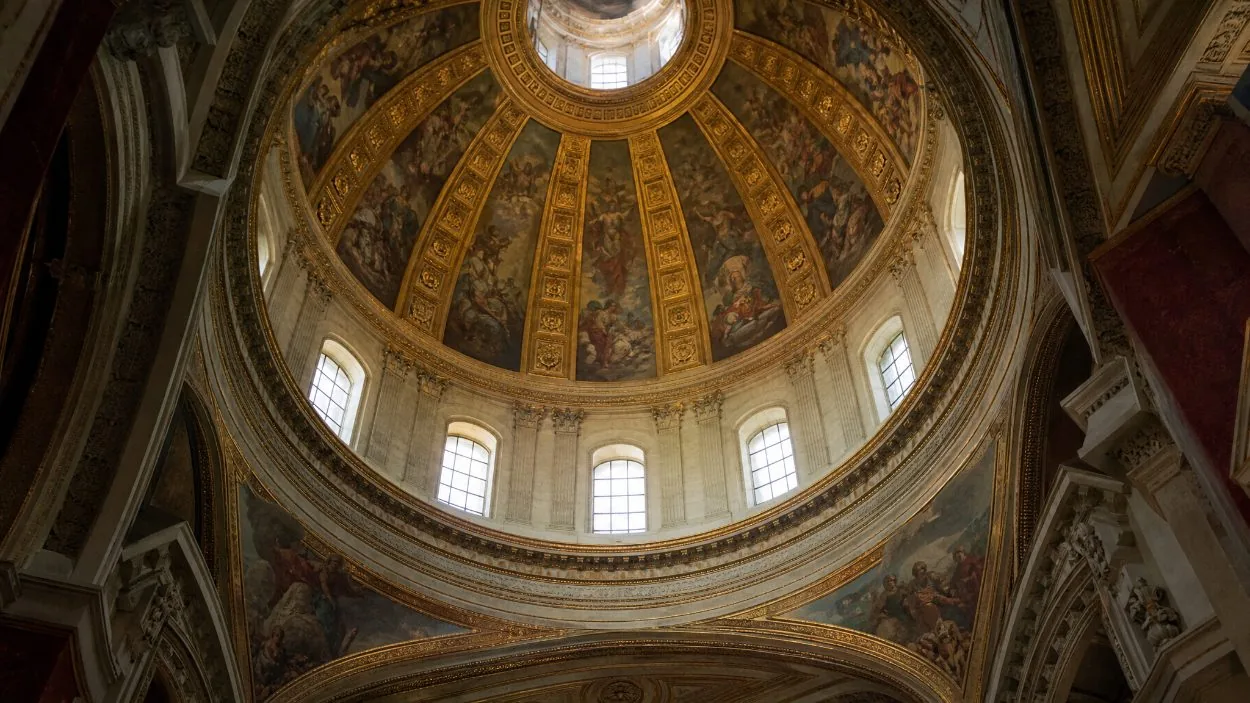
Jules Hardouin-Mansart built the royal church between 1677 and 1706; Charles de La Fosse painted the cupola. The dome was gilded in 1706, again under Napoleon in 1807, again under Napoleon III in 1869, and last in 1989 — that campaign used 12.65 kg of gold. Under the cupola you are not looking at a slab in the floor: you lean over the rail of an open crypt, cut into the church in 1842, where a sarcophagus of red quartzite rests on a green granite base, ringed by twelve marble Victories by Pradier. The body is inside, in a set of nested coffins — we count them on this page.
Napoleon arrived here twenty years after he died
He died on Saint Helena on 5 May 1821. The return of the ashes was negotiated under Louis-Philippe; the coffin came up the Champs-Élysées and entered Les Invalides on 15 December 1840, in bitter cold, in front of an enormous crowd. Visconti’s tomb, though, was only finished in 1861: in between, the body waited in a side chapel. That gap explains a great deal about how the Dôme is laid out — the tomb page follows the thread.
He is not alone in there
You come for one man and find about twenty. Under the Dôme and in its chapels: Turenne and the heart of Vauban, both moved here by Napoleon himself; his son Napoleon II, the Eaglet, brought back from Vienna in 1940; his brothers Joseph, King of Spain, and Jérôme, King of Westphalia; the generals Bertrand and Duroc; the marshals Foch and Lyautey. The list, with what each is doing there, is on the burials page. Who is not here: Napoleon III, buried in England, and General de Gaulle, buried at Colombey.
The Army Museum is bigger than people expect
Visitors plan an hour and come out after three, or else they do a third of it and regret the rest. There are in fact several museums stacked on top of each other: the arms and armour of the 13th to 17th centuries, the two great departments — Louis XIV to Napoleon III, and the two World Wars — the Charles de Gaulle Historial in the basement, and right at the top, under the roof, the relief maps: Louis XIV’s scale models of fortified towns, in a room that is nearly dark. My advice on timing is on the how-long page.
The neighbourhood is half the day
Les Invalides is not an island. The Rodin Museum and its sculpture garden are four hundred metres away along the rue de Varenne; the Pont Alexandre-III and the Grand Palais are on the far side of the esplanade; the Champ-de-Mars and the Eiffel Tower are a quarter of an hour’s walk west. Plenty of people do Les Invalides in the morning and Rodin in the afternoon: it is the best half-day in the 7th arrondissement, and I explain it on the Rodin page.
What I would tell someone coming once
Come in by the Place Vauban if the tomb is your priority, by the esplanade if the courtyard is. Start with the Dôme, while the light is still low and the coach groups have not arrived. Then cross the cathedral of Saint-Louis, which costs nothing and which everyone skips. Go up to the relief maps, even for fifteen minutes. Keep the two World Wars department for last, because it is long and you enter it tired. And leave through the moats, among the cannon: that is where you finally understand the size of the place.
Frequently asked questions
What is inside the Hôtel des Invalides?
Far more than a museum. Across thirteen hectares: the Army Museum, the Dôme and Napoleon’s tomb, the Museum of Relief Maps, the Museum of the Order of the Liberation, the Charles de Gaulle Historial, the cathedral of Saint-Louis-des-Invalides, the French defence archives, the military governor of Paris and a care institution where wounded servicemen still live. The detail is on the what-to-see page.
How do you visit Napoleon’s tomb?
With the Les Invalides entry ticket, which opens the Dôme at no extra cost. You come in under the cupola, look down at the sarcophagus from the circular rail, then descend into the crypt by a turning stair. The full sequence is on the tomb page.
What can you visit for free at Les Invalides?
The esplanade, the moats and the battery of cannon, the great courtyard and the cathedral of Saint-Louis-des-Invalides are free to enter, with no ticket. Everything else is ticketed. The exact line is on the free-access page.
Which famous person is buried at Les Invalides?
Napoleon I, under the Dôme, since the return of the ashes on 15 December 1840. But he is not alone: Turenne, the heart of Vauban, Napoleon II the Eaglet, his brothers Joseph and Jérôme, the generals Bertrand and Duroc, the marshals Foch and Lyautey. The list is on the burials page.
How long do you need at the Hôtel des Invalides?
Two to four hours for most visitors. One hour is enough if you have come only for the Dôme and the tomb; you need four to add the relief maps and the two World Wars department. The breakdowns are on the how-long page.
Which days is the Hôtel des Invalides closed?
Three days a year: 1 January, 1 May and 25 December. Some spaces also close on the first Monday of the month. The dates that catch people out are on the closing-days page.
Do you need to book to visit Les Invalides?
It is not compulsory: there is no timed entry slot and the ticket is valid all day. Booking ahead simply avoids the ticket-desk queue, which is real in summer and during school holidays. See the booking page.
Is there a dress code at Les Invalides?
No. The Dôme is a former royal church and the Saint-Louis cathedral is a working place of worship, so tidy dress is appreciated, but no rule is posted or enforced. The detail is on the dress-code page.
What is the difference between the Panthéon and Les Invalides?
The Panthéon honours civilians — writers, scientists, résistants — by decision of the Republic. Les Invalides is a military complex where soldiers lie and, at the centre, a single sovereign: Napoleon. Two institutions, two logics. See Panthéon or Les Invalides.
Can you see the Eiffel Tower from Les Invalides?
Yes, at a distance, from the esplanade and from the west side of the monument: it rises above the rooftops a little over a kilometre away. The viewpoints are described on this page.
Is Les Invalides on the Paris Museum Pass?
Yes, the Army Museum and Napoleon’s tomb are among the covered monuments. You have to collect the pass before you start, which costs half an hour on the first day: see the pass page.
Are there still soldiers at Les Invalides?
Yes. The site still houses the Institution nationale des Invalides, which treats and houses wounded servicemen, and the staff of the military governor of Paris. It is not a stage set: see this page.
Still have a question? Write to us at [email protected]