The complete guide to Les Invalides
I spent twenty-two years sorting archive boxes in one wing of this building, and I have lived on the rue Saint-Dominique ever since. I see the same scene on the esplanade every day: people photograph the golden dome from the Pont Alexandre-III, walk through the courtyard, decide it is enormous, and leave. They have seen neither the tomb nor a single gun from the collection. This site exists to say that sentence before the visit, not after.
It is not a museum, it is a small town
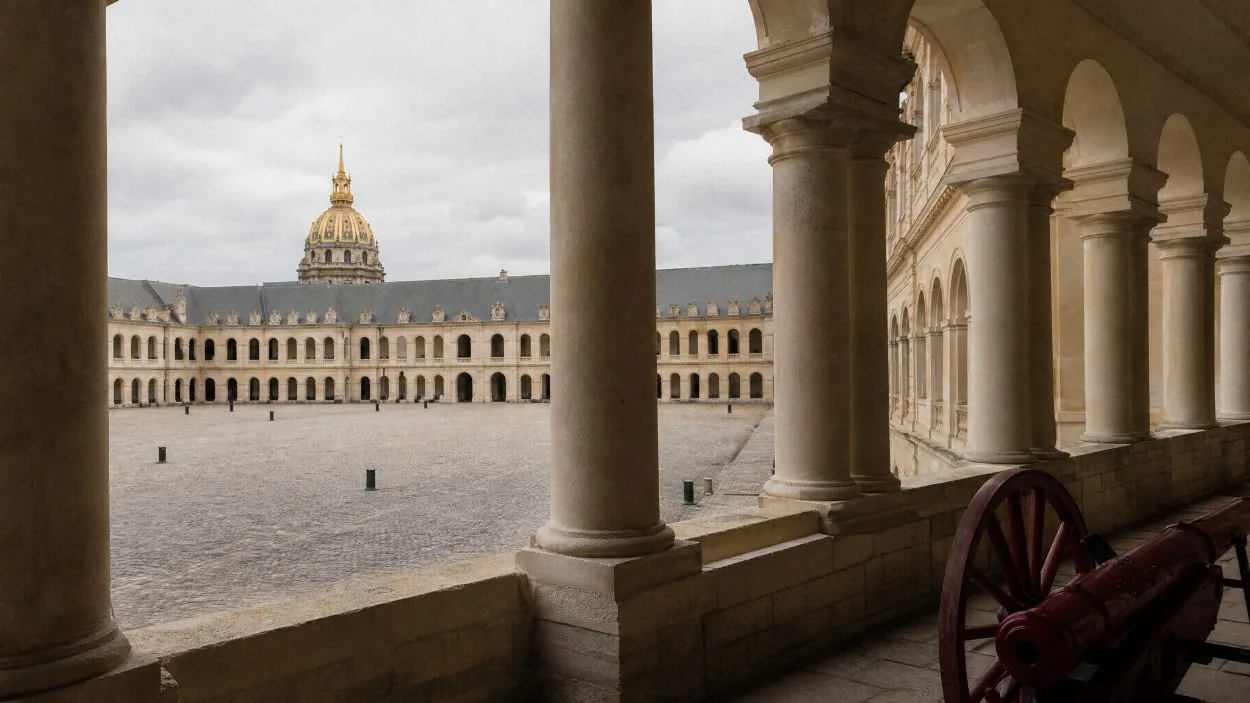
The Hôtel national des Invalides covers thirteen hectares and still contains things that have nothing to do with one another: four museum spaces, a working military parish cathedral, a royal church under a gilded dome, the French defence archives, the military governor of Paris, and a care home where wounded servicemen actually live. You do not “do the museum” in an hour here; you choose what you are going to see. What is open to visitors is set out on the what-to-see page.
What is free, and what you pay for
The boundary is simple, and almost nobody knows it before arriving. Free, with no ticket: the esplanade, the dry moats and their bronze cannon, the great courtyard, and the cathedral of Saint-Louis-des-Invalides — the soldiers’ church, the one hung with flags captured from the enemy. What you pay for is everything behind a controlled door: the Army Museum, the Dôme and its tomb, the Museum of Relief Maps, the Museum of the Order of the Liberation and the Charles de Gaulle Historial. The full list is on the free-access page.
One ticket, four museums
This is the point I repeat most often, and the one that pleases people most: there is no separate “Napoleon’s tomb” ticket. The Army Museum entry ticket also opens the Dôme, the relief maps, the Order of the Liberation, the de Gaulle Historial and the temporary exhibitions. Visitors hunting for a price for the tomb alone are hunting for something that does not exist. Exactly what the ticket covers is on its own page.
The Dôme, and what is inside it
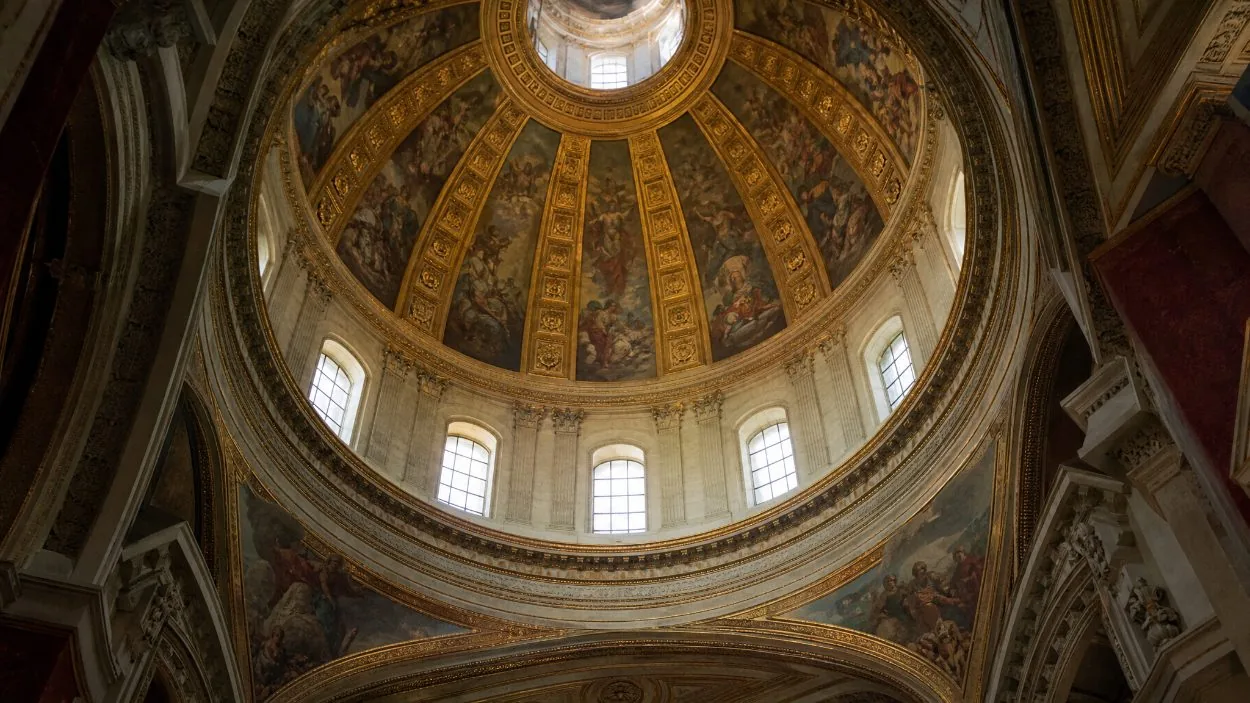
Jules Hardouin-Mansart built the royal church between 1677 and 1706; Charles de La Fosse painted the cupola. The dome was gilded in 1706, again under Napoleon in 1807, again under Napoleon III in 1869, and last in 1989 — that campaign used 12.65 kg of gold. Under the cupola you are not looking at a slab in the floor: you lean over the rail of an open crypt, cut into the church in 1842, where a sarcophagus of red quartzite rests on a green granite base, ringed by twelve marble Victories by Pradier. The body is inside, in a set of nested coffins — we count them on this page.
Napoleon arrived here twenty years after he died
He died on Saint Helena on 5 May 1821. The return of the ashes was negotiated under Louis-Philippe; the coffin came up the Champs-Élysées and entered Les Invalides on 15 December 1840, in bitter cold, in front of an enormous crowd. Visconti’s tomb, though, was only finished in 1861: in between, the body waited in a side chapel. That gap explains a great deal about how the Dôme is laid out — the tomb page follows the thread.
He is not alone in there
You come for one man and find about twenty. Under the Dôme and in its chapels: Turenne and the heart of Vauban, both moved here by Napoleon himself; his son Napoleon II, the Eaglet, brought back from Vienna in 1940; his brothers Joseph, King of Spain, and Jérôme, King of Westphalia; the generals Bertrand and Duroc; the marshals Foch and Lyautey. The list, with what each is doing there, is on the burials page. Who is not here: Napoleon III, buried in England, and General de Gaulle, buried at Colombey.
The Army Museum is bigger than people expect
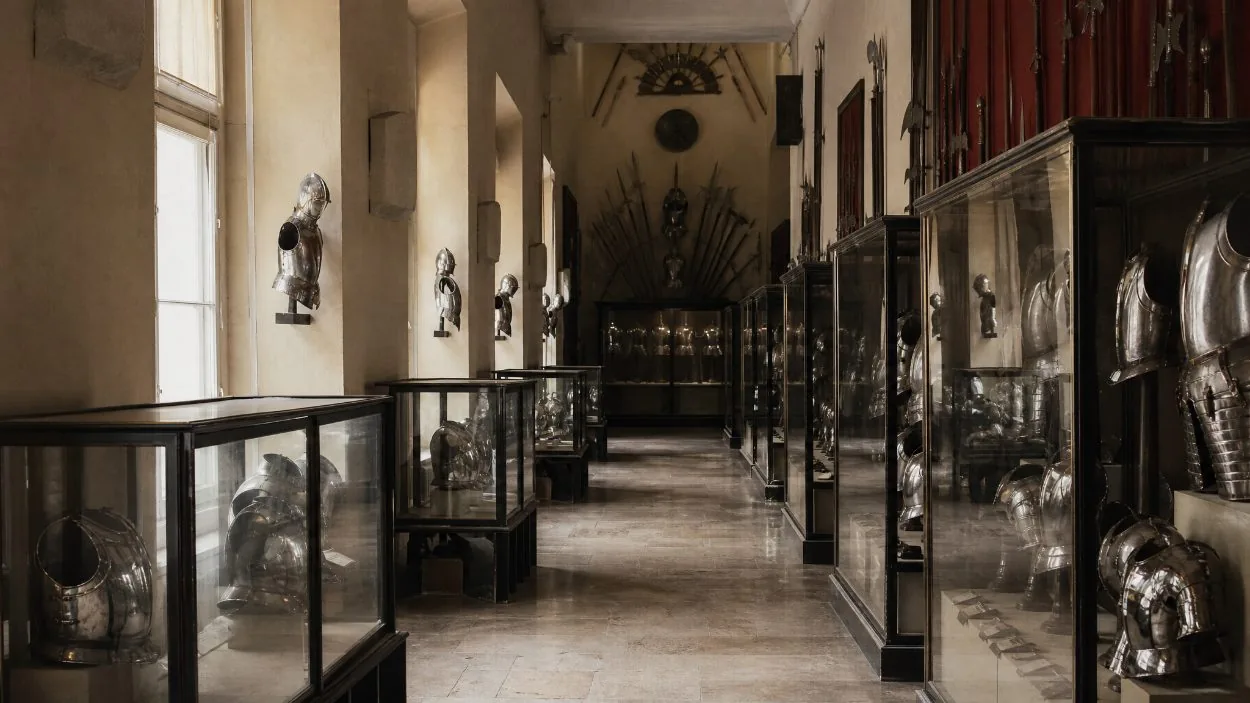
Visitors plan an hour and come out after three, or else they do a third of it and regret the rest. There are in fact several museums stacked on top of each other: the arms and armour of the 13th to 17th centuries, the two great departments — Louis XIV to Napoleon III, and the two World Wars — the Charles de Gaulle Historial in the basement, and right at the top, under the roof, the relief maps: Louis XIV’s scale models of fortified towns, in a room that is nearly dark. My advice on timing is on the how-long page.
The neighbourhood is half the day
Les Invalides is not an island. The Rodin Museum and its sculpture garden are four hundred metres away along the rue de Varenne; the Pont Alexandre-III and the Grand Palais are on the far side of the esplanade; the Champ-de-Mars and the Eiffel Tower are a quarter of an hour’s walk west. Plenty of people do Les Invalides in the morning and Rodin in the afternoon: it is the best half-day in the 7th arrondissement, and I explain it on the Rodin page.
What I would tell someone coming once
Come in by the Place Vauban if the tomb is your priority, by the esplanade if the courtyard is. Start with the Dôme, while the light is still low and the coach groups have not arrived. Then cross the cathedral of Saint-Louis, which costs nothing and which everyone skips. Go up to the relief maps, even for fifteen minutes. Keep the two World Wars department for last, because it is long and you enter it tired. And leave through the moats, among the cannon: that is where you finally understand the size of the place.
Ready to book?
The entry ticket opens the Army Museum, the Dôme and the tomb, the relief maps, the Order of the Liberation and the Charles de Gaulle Historial. The six formats are compared on the bookings page, and this ticket in detail on its own page.
Frequently asked questions
Does this guide replace a guided tour?
No. This page prepares the visit; a guide narrates it on site. The formats are compared on this page.
How long should you allow in total?
Two to four hours. One hour is enough for the Dôme alone: the detail is on the how-long page.
Where should you start with only an hour?
The Dôme and the tomb, then the Saint-Louis cathedral on the way out. The full route is on the what-to-see page.